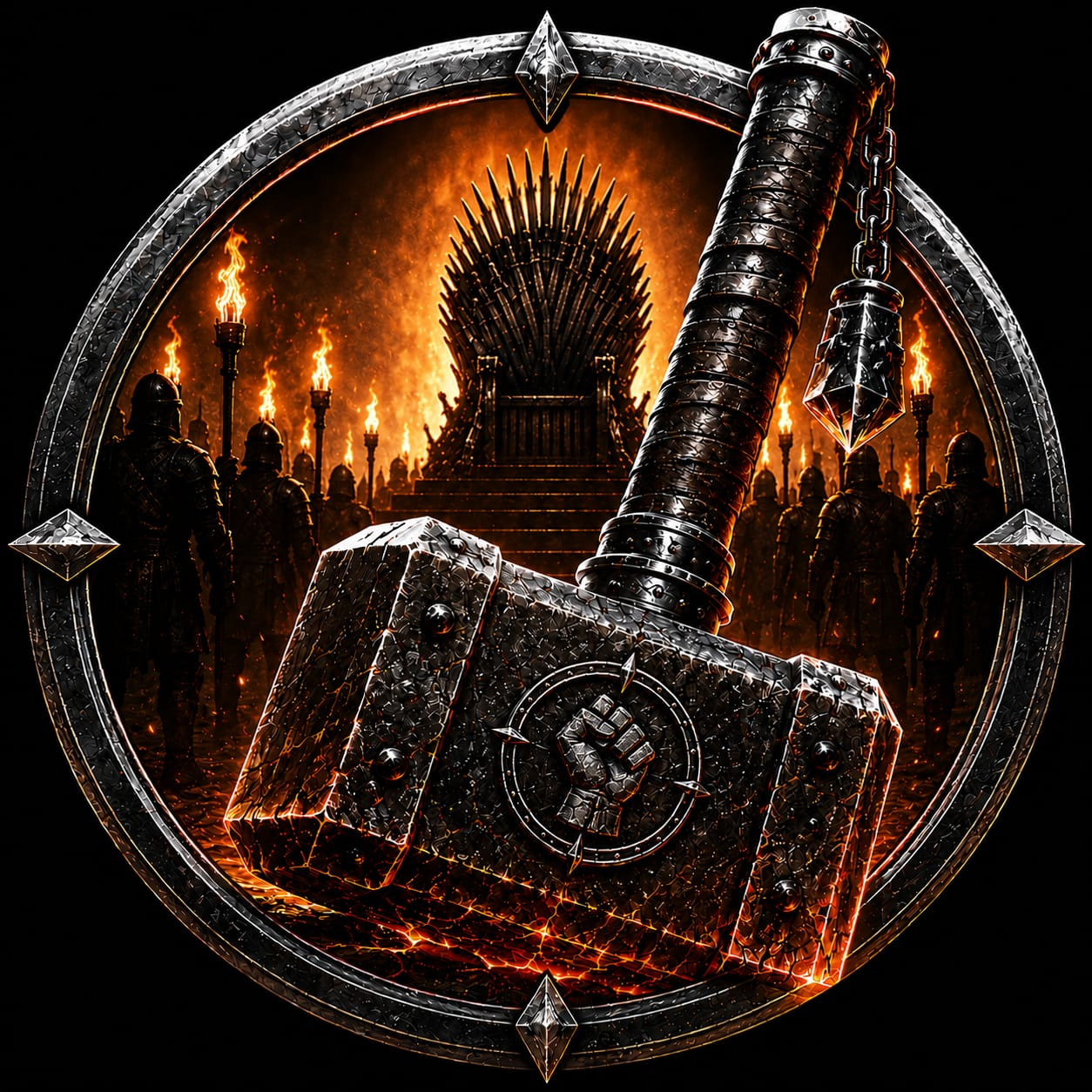
The Story of Kawa the Blacksmith
A folk tale of tyranny, courage, and the birth of Nowruz — retold in playable form.
A tyrant, a serpent, and a forge
Long before empires wrote their own history, a tyrant named Zahhak ruled the lands between the Zagros mountains and the Persian plateau. Two black serpents grew from his shoulders — a curse for his cruelty — and every dawn the beasts demanded the brains of two young men. For a thousand years the fields grew silent, the cradles emptied, and the forges of the villages fell cold. It is here, in a dusty smithy far from Zahhak's palace, that our story begins.
The blacksmith who lost seventeen sons
Kawa was not a warrior. He was a smith who shaped ploughs, fixed pots, and forged the humble tools that fed his village. But one by one, sixteen of his sons were taken by Zahhak's guards. When they came for the seventeenth, Kawa refused. He raised his leather apron high on the tip of his hammer, painted it with the ember of the forge, and marched into the marketplace with a single question that carried farther than any war-horn: How much longer will we obey?
The banner and the uprising
That leather apron became the Derafsh Kaviani — the Kavian Banner — a symbol of popular resistance that flew for centuries after Kawa's own lifetime. In the game, every chapter follows a beat of that legend: the villages waking, the roads opening, the guards falling, and finally the throne cracking. Story Mode plays the tale in full; Endless Arena and Boss Rush let you re-enact the fiercest fights on your own terms.
Why Nowruz, and why now
In the Kurdish and Iranian world, the fall of Zahhak is remembered every 21 March — Nowruz, the new day. Communities light bonfires on the mountains to echo the fires Kawa lit to signal the uprising. We built this game because a story that has endured 3,000 years deserves a modern retelling that families can play together, in a form that respects both the folklore and the values of its audience.
Read the full lore →Amade yî ku çakûçê bilind bikî?
Her beşek belaş e — ne dakêşan, ne qeydkirin.